
To master World of Warcraft raid timers, you’ll need precision, timing, and coordination. Use add-ons like Deadly Boss Mods or BigWigs for real-time alerts. Synchronize cooldowns to maximize DPS and mitigate damage. Effective communication is key—assign roles and utilize concise, strategic voice chat. Positioning optimizes healing and damage. Real-time adjustments and anticipation of boss patterns keep your team agile. Regularly analyze past raids to refine tactics and improve performance. Your expertise in these areas can turn chaotic encounters into streamlined, efficient victories. Ensuring consistent excellence requires embracing detailed preparation and continuous learning in these techniques.
Key Takeaways
- Utilize Deadly Boss Mods (DBM) for customizable alerts and real-time updates on critical raid mechanics.
- Synchronize team cooldowns to maximize DPS and prevent overlaps during key damage phases.
- Maintain clear and concise voice communication to ensure swift strategy adjustments during encounters.
- Conduct pre-raid briefings and establish protocols to enhance situational awareness across the team.
- Regularly analyze past raid data to identify areas for improvement and optimize future raid strategies.
Understanding Raid Timers
Understanding raid timers is crucial for any serious World of Warcraft raider aiming for peak efficiency and success. In high-stakes environments, mastering raid mechanics and encounter timings can be the difference between victory and a costly wipe.
To maximize your effectiveness, you need to synchronize your cooldown rotations meticulously. Knowing when damage phases occur allows for ideal buff windows, ensuring you release your maximum potential at the right moment. Avoid burning essential cooldowns prematurely.

Equally important is debuff management; understanding when to cleanse or counter specific debuffs can prevent catastrophic damage to your group. Effective positioning strategies enhance your ability to dodge mechanics, while maintaining ideal proximity for heals and damage.
Healers should anticipate healing patterns and preemptively mitigate damage spikes through coordinated healing bursts. Tanking roles demand intricate aggro management to keep the raid functioning smoothly. Failure in any of these areas can lead to quick deterioration of the raid’s structure.
Choosing the Right Add-ons
Mastering raid timers lays a solid foundation, but honing your skills further demands choosing the right add-ons. Start with Deadly Boss Mods (DBM) — arguably the most vital add-on in a seasoned raider’s toolkit. DBM’s customizable alerts keep you informed about essential timings in real-time. Next, encounter specific add-ons like BigWigs that can provide alternative, sometimes more detailed, raid boss details. These work in synergy with DBM, ensuring redundancy and precision.
Your user interface (UI) can drastically affect your performance. Include WeakAuras to create custom visual and audio alerts specific to your class and role. WeakAuras allows for intricate scripting, giving you an edge in responding to dynamic raid conditions. For a clean and clear UI, integrate ElvUI to streamline your whole interface, reducing distractions and focusing purely on raid-critical information.

Add-on recommendations wouldn’t be complete without Exorsus Raid Tools (ERT). Offering advanced tracking for cooldowns, raid assignments, and even boss mods, ERT is indispensable for raid leaders and strategists.
Enhance your add-on settings regularly. Test different configurations in practice runs to find the best setup that minimizes clutter while maximizing important alerts. By fine-tuning your UI and leveraging these add-ons, you’ll catapult yourself into the upper echelon of raiders.
Timing and Coordination
Perfecting timing and coordination in raids boils down to precision and real-time execution. Timing strategies are your foundation; they enable pinpoint-accurate decisions and maximize DPS and survivability. Set your raid timers to signal you before vital boss mechanics kick in. This preemptive alert system enhances your situational awareness and readiness.
Next, mastering coordination tactics is essential. Utilize raid markers to designate roles and positioning efficiently. Pre-determined spots reduce chaos, enhance focus, and streamline execution. You should also practice synchronized cooldown rotations. Assign overlapping abilities like healing cooldowns and damage mitigation spells to specific intervals. Confirming these abilities don’t overlap inefficiently maximizes their effectiveness.
Your timing strategies can’t just be individual; they must reflect raid-wide coordination. Customize your timers and interface to guarantee they’re visible but unobtrusive. Maintain a constant dialogue within your team, utilizing voice communication to relay and adjust strategies on the fly.
Syncing With Team Members
To dominate raid timers, you’ve got to master syncing with your team members through precise communication channels. Establish consistent reminders to keep everyone aligned and make real-time adjustments to optimize performance. Fine-tuning these elements elevates your raid efficiency and guarantees seamless executions.
Coordinating Communication Channels
Effective coordination of communication channels is essential for syncing with your team members during World of Warcraft raids. Mastering voice chat etiquette and guaranteeing message clarity can make the difference between victory and defeat. A well-structured communication link allows your team to react promptly and efficiently.
Here’s how you can optimize your communication channels:
- Voice Chat Etiquette: Always use clear and concise language. Avoid talking over others and keep non-essential chat to a minimum during critical moments. This guarantees important instructions aren’t lost in the chaos.
- Designated Roles: Assign communication roles based on player responsibility. For instance, tanks should call out boss movements, healers should announce cooldowns, and DPS should alert on specific mechanics. This targeted approach avoids information overload.
- Pre-Raid Briefings: Conduct a brief pre-raid meeting to outline the strategy and establish the communication protocol. This guarantees everyone is on the same page and reduces potential miscommunication during intense encounters.
Your ability to maintain disciplined and clear communication leads to smoother raids and higher success rates. By integrating these techniques, you’ll enhance team coordination, maximizing raid effectiveness and propelling your guild to the next competitive level.
Setting Consistent Reminders
Syncing communication is only part of achieving raid success in World of Warcraft; setting consistent reminders solidifies your team’s coordination. To stay ahead, you need a robust scheduling system that incorporates precise reminder frequency and diverse notification types. Ideal raid performance demands that reminders are periodic and synchronized across your team. Configure your in-game add-ons to emit notifications at strategic intervals – 30 seconds, 1 minute, and 5 minutes before a key event.
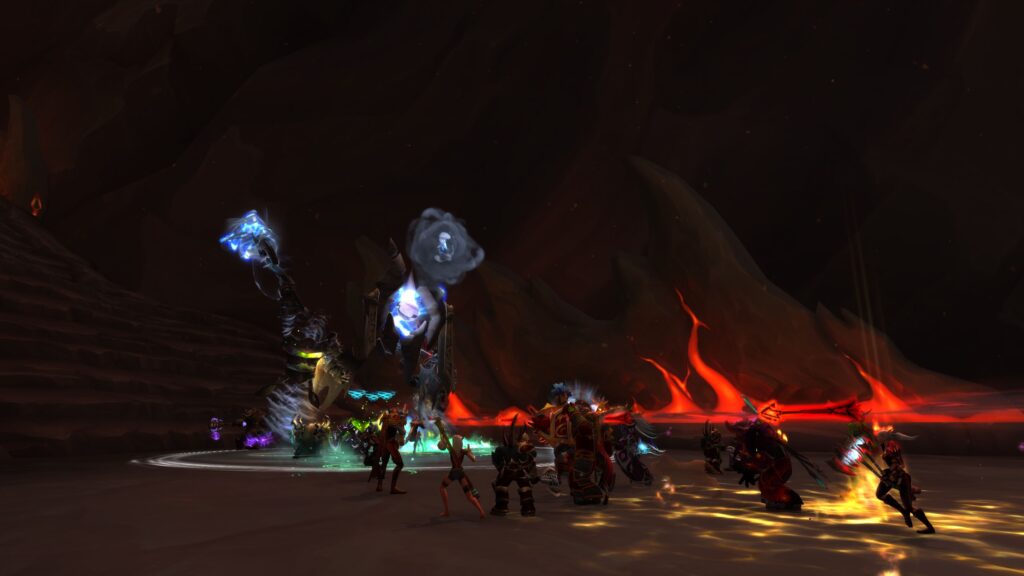
Choose notification types that suit your team’s preferences. Visual cues, like flashing screen edges or countdown timers, can be combined with auditory signals such as alert sounds or spoken warnings. This multi-faceted approach guarantees no team member misses a vital moment. Engage with your add-ons’ settings and experiment with various formats until you find the best reminder system.
Confirm everyone on your team is using the same add-ons and configurations to avoid discrepancies. Consistency guarantees that each player reacts in unison to impending threats or timers. This level of synchronicity elevates your team’s competitiveness, making you not just participants but raid leaders in World of Warcraft. Maximize your raid timer utility by setting and syncing these reminders seamlessly.
Real-Time Adjustments
In the heat of a World of Warcraft raid, real-time adjustments are essential for keeping your team agile and responsive. You’re not just managing your cooldowns; you’re syncing with your entire team to execute adaptive strategies and impeccable time management. Let’s explore how you can become the mastermind behind flawless real-time adjustments.
- Communicate Effectively: Establish clear, concise communication channels. Use voice chat or in-game macros to alert your team of incoming abilities, positioning changes, or sudden boss phases. Coordination guarantees everyone is on the same page and can react instantaneously.
- Monitor Timers Actively: Your raid’s success hinges on continually tracking raid timers. Tools like DBM (Deadly Boss Mods) or BigWigs provide live updates on critical events. Glancing at these timers can inform your decisions and allow you to adapt to changes on the fly.
- Delegate Roles: Assign specific team members to manage particular aspects of the raid. For example, one person could be responsible for calling out boss abilities, while another focuses on healing cooldowns. Delegation guarantees that no critical element slips through the cracks, maintaining ideal time management.
Mastering real-time adjustments in World of Warcraft raids requires precise execution, solid communication, and continuous vigilance to adapt perfectly to dynamic combat situations.
Reaction Strategies
To dominate raid timers, you’ll need to master quick reaction techniques and precisely predict boss patterns. Coordinate team movements meticulously to exploit every opportunity and avoid catastrophic mistakes. Your expertise in these areas will set your team apart from the rest.
Quick Reaction Techniques
When seconds count and every move matters, mastering quick reaction techniques is essential for competitive raiding in World of Warcraft. To guarantee your raid group’s success, incorporate reaction drills and reflex exercises into your training regimen. These techniques will sharpen your ability to respond instantly to evolving scenarios.
First, employ reaction drills. Simulate common raid scenarios with these drills to create muscle memory. For instance, practice dodging AoE attacks from boss abilities. This conditioning builds your reflexes and improves your instinctual responses.
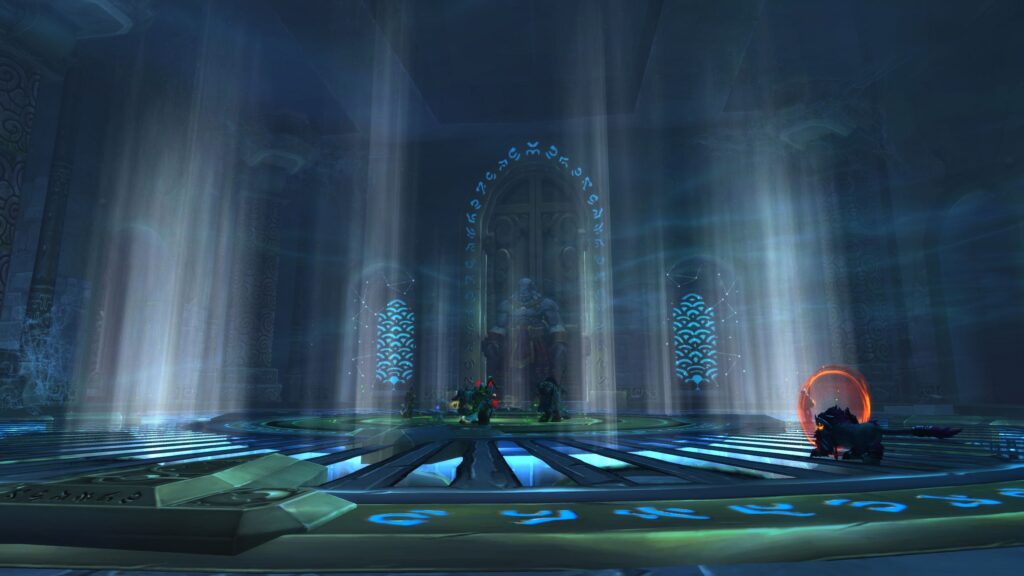
Second, integrate reflex exercises into your daily gaming routine. These exercises can range from timing your abilities to counter boss mechanics to efficiently moving between safe zones. Over time, these tasks become second nature, boosting your overall raid performance.
Third, maintain a hotkey-centric setup. Position essential abilities and consumables within easy reach, reducing the time required to activate them. This setup minimizes the distance your fingers travel, guaranteeing swift execution during critical junctures.
Predicting Boss Patterns
Mastering quick reactions and building muscle memory sets the stage, but predicting boss patterns separates the good from the elite raiders. You need to understand every facet of boss abilities and encounter mechanics to anticipate what’s coming next. Studying these patterns isn’t just about recognizing cycles; it’s about foreseeing the threats and adjusting before they materialize.
Start by gathering detailed information about the boss’s abilities. Every attack has a tell—a visual cue or a specific sound. Memorize these indicators to cue your preemptive actions. Advanced raiders often rely on external tools like WeakAuras to display precise timers and warnings. Integrate such add-ons with your gameplay to reduce the mental load of keeping track.
Don’t just memorize; analyze. Look at past raids, dissect the boss’s movement and attack sequences. Notice how these patterns shift at different health thresholds or during specific phases of the encounter. Engage in practice runs and simulate scenarios where you can test your predictions. The more you practice, the sharper your anticipatory skills become.
Simply reacting isn’t enough; anticipate and act before the threat becomes reality. This foresight will distinguish your raid team and lead to fewer wipes and smoother encounters.
Coordinated Team Movements
During high-stakes encounters, seamless coordination among team members isn’t just beneficial—it’s essential. To master coordinated team movements, you need to focus on your team synergy and movement strategies. Your navigation techniques and positioning tactics will make or break your success in challenging boss encounters.
- Spatial Awareness: Being keenly aware of the environment is paramount. Knowing where to be and when to move guarantees you avoid deadly mechanics and maintain ideal positioning.
- Role Responsibilities: Each team member must understand their specific duties. Tanks manage boss positioning, healers guarantee survival, and DPS focus on the target. Knowing your role lets you react effectively.
- Engaging Mechanics: Sophisticated mechanics require precise reaction. For instance, spread out during AoE attacks to minimize damage, or group up when healing is required. You must adapt your positioning tactics based on raid mechanics.
Strong group dynamics amplify these efforts. Properly executed, your team’s movement strategies and spatial awareness create a synchronized dance, guaranteeing ideal performance. Always prioritize communication to refine your coordination. By mastering these elements, you cover all bases, turning formidable encounters into conquerable challenges.
Analyzing Past Raids
Analyzing past raids is essential for any raid team aiming to improve their efficiency and execution. By meticulously reviewing your raid history, you’ll uncover critical areas where the team can optimize both strategy and performance. Start by collecting all performance metrics from previous runs, including damage output, healing efficacy, and death counts. Tools like Warcraft Logs can provide a granular view of individual contributions and overall raid success.
Focus on specific encounters where the team struggled. Break down these segments to pinpoint whether the issue was a DPS race, healing shortage, or faulty mechanics handling. Use the performance metrics to identify underperformers and areas needing tactical adjustments. Metrics such as time-to-kill, cooldown efficiency, and positioning errors should be scrutinized to develop improvement plans.
Further, compare your team’s performance against top-tier raid groups. Benchmarking your raid history against these elite teams can reveal gaps in your current strategy and highlight superior techniques. Look for patterns of success and shortfall; this could range from the ideal class composition to execution speed. By thoroughly analyzing past raids, you position your team to refine their approach, leading to smoother, faster, and more successful future encounters.
Adapting to Changes
Adapting to changes in World of Warcraft raids demands both agility and a forward-thinking mindset. As the environment switches unpredictably, employing dynamic strategies and responsive tactics becomes essential. You need to cultivate situational adaptability through flexibility training and contingency planning. Here’s how you can elevate your approach:
- Situational Awareness and Real-Time Evaluation: Constantly monitor raid scenarios, leveraging real-time evaluation to tweak your strategies on the fly. Employ decision-making skills to discern immediate dangers or opportunities.
- Effective Adjustments and Adaptive Gameplay: Learn to make rapid, effective adjustments. Adaptive gameplay is your key to overcoming unforeseen obstacles. Practice this by taking on smaller, unpredictable encounters to hone your reflexes.
- Responsive Tactics and Flexibility Training: Develop a habit of flexibility training. Change your routines and roles within the raid to keep your strategies versatile. This not only boosts individual performance but also enhances the overall group’s situational adaptability.
Remaining vigilant and ready to respond to the ever-changing conditions will make you a pivotal asset in any raid group. Your ability to adapt isn’t just about surviving; it’s about mastering the raid and turning challenges into victories.
Frequently Asked Questions
How Can I Reduce Lag During a Raid in World of Warcraft?
To reduce lag during a World of Warcraft raid, first, optimize your internet connection by using a wired connection or a high-speed wireless one. Next, streamline your add-on management by disabling unnecessary add-ons. Adjust graphic settings to lower options for increased performance. Finally, consider hardware upgrades like more RAM or a better GPU for smoother gameplay. These steps guarantee a competitive edge with minimal lag.
What Are the Best Settings for Optimizing Performance in Raids?
You might think tweaking settings won’t make a huge difference, but optimizing performance in raids is essential. First, prioritize performance addons like WeakAuras and Deadly Boss Mods. Set graphics to a mix of medium and low; textures on low, particle density, shadow quality, and view distance minimized. Disable unnecessary addons. This settings optimization can drastically reduce lag, ensuring smoother gameplay and giving you that competitive edge in your raids.
How Often Are Raid Timers Updated in Game Patches?
Raid timer mechanics get updated with each new content patch. You’ll notice that the patch frequency in World of Warcraft is typically every few months. Blizzard fine-tunes these mechanics to maintain competitive balance and to respond to player feedback. Monitoring patch notes closely is essential because minor tweaks can change ideal strategies. Stay ahead by regularly reviewing how these updates affect boss encounters and overall raid performance.
Can Raid Timers Affect Loot Distribution in Any Way?
Raid timers can directly influence loot distribution by ensuring loot fairness. When you’re using timer strategies, you’re maximizing efficiency, cutting down wasted time, and planning precise kill times. This detailed approach lets your raid group optimize performance and reset schedules, which can ultimately result in a more equitable loot split. Implementing timer strategies requires a high level of technical expertise but leads to more competitive and effective raiding.
Are There Any Server-Specific Issues That Can Impact Raid Timers?
Have you ever wondered why your raid timers seem off? Server latency, timezone differences, server maintenance, and player connectivity can directly impact raid timers on specific servers. First, high server latency may cause delays in boss encounters. Timezone differences could mean you’re coordinating with players in various regions. Routine server maintenance might also disrupt scheduled raids. Finally, connectivity issues among team members can lead to unexpected pauses, affecting overall raid performance.
Conclusion
Mastering raid timers in World of Warcraft is like being the conductor of a symphony, where precise timing and coordination are your instruments. By choosing the right add-ons, syncing seamlessly with your team, and strategizing reactions, you’ll elevate your gameplay. Analyze past raids and adapt to changes swiftly, ensuring you’re always ahead of the curve. With these techniques, you’re not just playing; you’re dominating the battlefield. Now, get out there and lead your raid to victory!
